Escape and its futility
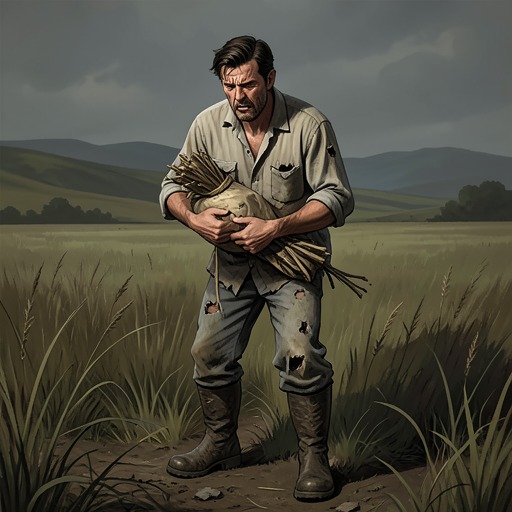
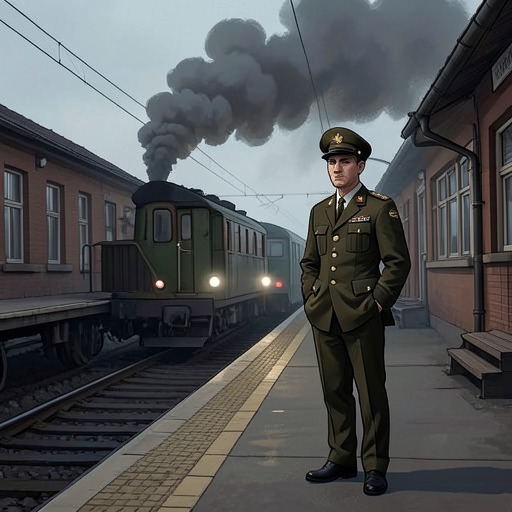
Journey to the End of the NightEscape and its futility names a recurring pattern in Ferdinand Bardamu’s experience: he repeatedly seeks distance from institutions and conditions that threaten to consume him, yet finds that flight rarely delivers freedom. The pattern runs from his departure from war-torn France to the colonial company’s labor system, through the factory in America and the desperate routines of city life. Escape can provide a brief refuge, but it does not abolish the forces he is fleeing; often it merely changes their form.
Escape as Survival
During the war, Bardamu comes to see himself as caught in a collective movement toward killing, a horror he had not imagined before entering the conflict. The recognition that he has been swept into mass violence makes escape less a quest for a better life than an effort to survive what he can no longer accept. He later describes his departure for Africa in those terms: others send him toward the colonies hoping he will recover and make his fortune, while he chiefly wants to get away. He lacks the money to go to America, so Africa becomes the available route out. His outwardly useful posture is part of the strategy: without wealth, he believes he must appear serviceable, deferential, and unobtrusive.
The colonial posting exposes the limits of that strategy. In the company warehouse, learning to count sacks means working among clerks while laborers endure the company’s discipline; the Director also checks that Bardamu is learning to falsify weights. The company’s operation presents its exploitation as orderly commerce, but its demands leave little room for independent choice. Bardamu’s next hope is the colonial hospital, which he sees as the one place where he might be forgotten and sheltered from the bosses. He considers making himself ill enough to avoid being sent into the bush, and even hopes that severe illness might get him shipped back to France. The hospital is thus both a temporary refuge and a possible route home, but the rules governing admission and return make neither outcome secure.
Flight Through the Colonial Interior
When the trading post burns, Bardamu faces a choice between returning to Fort-Gono to explain the disaster and heading into the bush. He rejects the return: he believes that nothing can be explained and that the world’s habitual response is to crush people. Distrust becomes an explicit principle of self-preservation; in his view, reliance on other people means accepting a slow share in one’s own destruction. He therefore sets out after Robinson, despite his condition. The decision gives him movement, but not safety or a settled destination: the bush is another uncertain passage rather than an escape from the dangers that drove him there.
This episode makes the concept’s irony concrete. Bardamu has escaped the burning post, but what follows is not a return to control. His choice is made under pressure, against the possibility of punishment and in the absence of any trustworthy authority. Flight is necessary because remaining seems worse, yet it carries him onward into new exposure. The narrative treats escape not as a clean break but as a sequence of precarious decisions in which each route away from danger opens onto another danger.
Work as a New Form of Captivity
In America, the language of choice again gives way to imposed routine. At the factory, a superior warns Bardamu that his education and intelligence are of no use there: the workplace requires obedient performance, not thought. The machinery’s vibration overtakes the workers, and the men are distributed among machines until conversation and individual distinction disappear. Bardamu describes the process as becoming machine-like, a transformation in which the factory does not simply employ the body but reorganizes the worker’s attention and sense of self.
The work is reduced to repetitive tasks. Bardamu first passes linchpins to a blind colleague who has calibrated them for years; after doing the job badly, he is moved within three days to pushing a trolley of washers between machines. No one needs to reprimand him: the operation itself establishes the measure of his place. The day ends at six, but the noise and smell remain with him. This aftermath matters because leaving the building does not end the work’s effect. The factory follows him home in memory and sensation, while the next day’s labor waits ahead. Escape from the workplace is therefore only a daily interval, not release from the system that commands his time.
Bardamu’s response is not a successful revolt but an attempt to find something that feels like living. After several weeks of renunciation, he wants contact with people, especially a human presence unlike the factory workers he has come to experience as extensions of machinery. He seeks out a clandestine house and becomes a regular customer, spending his wages there. He describes this as a means of restoring himself against the physical horror of factory life; on Saturday nights, when business is crowded, he waits in the kitchen and writes short stories. These routines offer relief and a return to personal feeling, but their dependence on his pay makes them part of the same cycle of labor. The refuge is bought with wages earned in the place from which he longs to escape.
Repetition, Exhaustion, and Meaning
The idea extends beyond particular workplaces or journeys. In the city, Bardamu’s sleeplessness turns escape into a recurring practical problem: he must recover enough strength to find work the next morning, even as he dreads another day of insecure and degrading effort. He sees his attempts to flee necessity as projects that come to nothing, each failure seeming to confirm that his circumstances are inescapable. Going out into the street becomes a limited substitute for self-destruction, while sleep is necessary simply to resume the struggle. Escape here is neither heroic departure nor lasting transformation; it is the search for enough temporary relief to continue.
The novel’s repeated movements—from war toward Africa, from the company toward the bush, and from factory discipline toward paid refuge—give the concept its larger force. Each departure is understandable in its immediate circumstances: Bardamu seeks to avoid violence, coercive labor, surveillance, exhaustion, or despair. Yet the destinations do not stand outside the social arrangements that produce those pressures. The institutions change, but dependence and vulnerability persist. The result is not that flight is meaningless: it can postpone submission or secure a short interval of safety. Its futility lies in the gap between getting away from one immediate threat and achieving freedom from the conditions that keep generating the next.